Descriere
Sumar
Despre autori
[ENG]
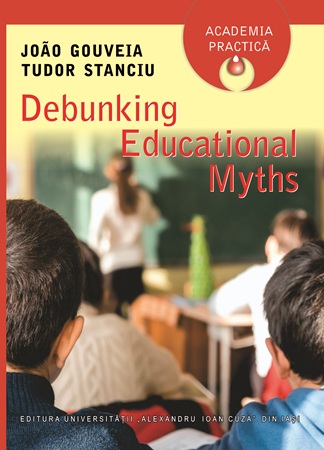
Educational myths are not harmless folklore. They have real consequences for real students. When we organize instruction around learning styles that don't exist, we waste precious time that could be spent on approaches with actual evidence of effectiveness. When we assume that digital technology will automatically revolutionize learning, we may neglect the fundamental cognitive principles that actually drive understanding. When we believe that education alone can overcome systemic inequalities, we may fail to address the structural barriers that truly limit opportunity. This book argues that we need to interrupt this pattern. Not by rejecting every educational innovation or reverting to outdated practices, but by cultivating a different relationship with educational ideas—one that is both more skeptical and more generous. More skeptical in demanding evidence before transforming insights into mandates. More generous in recognizing that most myths emerge from good intentions and often contain kernels of truth that deserve careful consideration.
[RO]
Miturile din domeniul educației nu sunt simple legende inofensive. Ele au consecințe reale asupra elevilor reali. Atunci când ne organizăm procesul de predare în jurul unor stiluri de învățare care nu există, pierdem timp prețios care ar putea fi dedicat unor abordări a căror eficacitate este dovedită. Când presupunem că tehnologia digitală va revoluționa automat procesul de învățare, riscăm să neglijăm principiile cognitive fundamentale care stau de fapt la baza înțelegerii. Când credem că educația poate depăși singură inegalitățile sistemice, riscăm să nu abordăm barierele structurale care limitează cu adevărat oportunitățile. Cartea de față pledează pentru întreruperea acestui tipar. Nu prin respingerea oricărei inovații educaționale sau prin revenirea la practici învechite, ci prin cultivarea unei relații diferite cu ideile educaționale – una care să fie deopotrivă mai sceptică și mai generoasă. Mai sceptică în a cere dovezi înainte de a transforma ideile în mandate. Mai generoasă în a recunoaște că majoritatea miturilor provin din intenții bune și conțin adesea sâmburi de adevăr care merită o analiză atentă.
Why this book matters
Part I: Myths about Learners and Learning
1: Constructivism: a well-intentioned educational myth?
2: Competences vs. Knowledge – a false dichotomy
3: ICT will revolutionize education – really?
4: Digital Natives – born tech geniuses?
5: The Learning Styles Myth
6: The Learning Pyramid – we love triangles
7: Learning by Discovery – unstructured learning works best?
8: Problem-Based Learning – one size fits all?
References
Part II: Myths About Socio-Economic and Political Factors in Education
9: Education is the great equalizer
10: Poor academic performance is due to lack of effort
11: Parental involvement is low because parents don’t care
12: Socio-economic status only affects early education
13: More money always means better education. The School Funding Fallacy: Why More Money Doesn’t Always Equal a Better Education
14: Education policy is driven purely by student needs
References
Part III: Maps, Pseudoscience and Bullshit
How to Avoid the Traps of Pseudoscience and Misinformation: A Guide for Educators
References
General bibliography
João Gouveia is a Professor at the Paula Frassinetti High School of Education and collaborates with several HEI. Consultant for educational institutions in the areas of Strategic Management and Institutional Evaluation. Consultant to the World Bank in educational and evaluation projects. Evaluator (among other institutions, ANQEP, IEFP, IGEC, Erasmus National Agency). He has coordinated, implemented and evaluated several teacher training and evaluation projects in Portugal, Angola, Guinea-Bissau, São Tomé and Príncipe, as well as several European countries. Author of several publications related to Educational Trends, Pedagogy, Training Management and Evaluation of educational institutions. Degree in Philosophy (University of Porto), Master in Training Evaluation (University of Aveiro) and PhD in Pedagogical Supervision/Evaluation (University of Salamanca).
Tudor Stanciu is an Associate Professor at the “Gheorghe Asachi” Technical University of Iași – DPPD (Department for Teacher Training), and Associate Professor at “Alexandru Ioan Cuza” University of Iași (Faculty of Philosophy and Social-Political Sciences). He has been a Visiting Professor in the United States of America at the College of Education, Lehigh University, and at Northampton Community College, Pennsylvania, USA (July 2012 – September 2013, Fulbright). He is the coordinator and director of the “CCOC TUIASI Counseling Center”. He graduated from Lehigh University, Pennsylvania, United States of America, with a specialization in Leadership, Counseling, and Guidance in Education, from the School of Graduate Studies; he also holds an MBA, a bachelor degree from the Faculty of Psychology and Educational Sciences (where he was valedictorian) from “Alexandru Ioan Cuza” University, and an engineering degree and PhD from the “Gheorghe Asachi” Technical University of Iași.